

What Does A Bad Disa Valve Sound Like Youtube
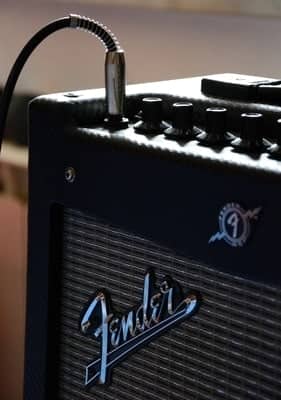
Nothing beats the truthful analog sound of a cranked tube amp!
That feeling when the 'sweet spot' is unearthed, and the tubes are creating witchcraft, belting out warm saturated tones when all all of a sudden… something goes 'pop' and things don't sound quite correct anymore!
The problem is, not many of united states of america have the luxury of a tube tester, leaving u.s. in the dark with our amps diagnosis and handling. Even if we did, a tube tester is not capable of painting a clear picture of the problem with our delicate tube amps.
Essentially, pre and power tubes are a cluster of delicate components concealed in a vacuum-sealed glass chassis. Their length of service hinges on many factors.
These range from how consistently the book is cranked, route travel, level of maintenance, vibrations from the speaker, wearable and tear, etc.
I and friends accept had our fair share of tube amp issues in the past. Our experiences brought me to write this post to assist place potential tube issues you may be experiencing.
Symptoms of Bad Pre and Power Tubes
- Unusual sounds coming from the amp..('popping' 'hissing' 'crackling' 'humming')
- The amps overall volume lower than usual
- Private tubes glowing brighter or dimmer than others
- The amp'due south tone has degraded (loss of tonal dynamics)
- The amp will non power on
What Practise Bad Tubes Look Like?
To begin with, it would make sense to place the visible signs of bad tubes before booking your amp with an amp tech to uncover any deeper problems.
Check the Filaments Glow!
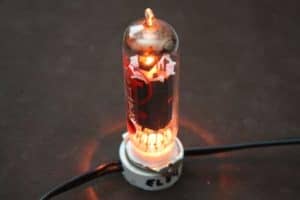
Luckily it's very easy to visibly identify what a bad tube looks like without the demand for a tube tester. Within your tubes, sits a heater filament and when working optimally, will illuminate with a satisfying warm orange glow.
These filaments when glowing, emit electrons at high temperatures producing oestrus for the tube which is needed to maintain the amplifier's optimal tone.
Depending on the manufacturer, other types volition glow more brightly than others. The main point is if the filaments are glowing as and to a good level, it means they are working and pass the first part of the visible test.
If a filament fails to glow, this is known as 'filament failure' and needs a replacement. If ane private tube glows less brightly than the others, information technology ways information technology has worn down and not functioning optimally which will also need replacing.
Notice the Tubes Illumination Color
Royal glow – A cloudy royal or violet glow around the inside of the components although looks pretty, is a clear indication that in that location's a leak somewhere within the tube.
If spotted, replace immediately before attempting to use the amp again. To maintain optimal office, tubes require an airless sealed vacuum.
An air leak inside the tube generates positive ions causing ionization within the components. Although this looks bonny it's actually damaging to your amplifier'due south health.
Blue glow – Not to exist dislocated with a purple or violet glow which is mutual, a brilliant bluish fluorescent glow is really the contrary and is a sign your tubes are good for you. Nix to fear with this ane, this is a side effect of a normal functioning tube.
Pink glow – Pinkish is a sign that the tubes have too much gas content inside the vacuum, caused past excessive grid currents within the components.
Check the Condition of the Getter
An aspect most people overlook with their tubes is checking the condition of the 'getter'. If you lot are unsure, a getter is a silverish or light grey metallic fabric that is used in whatsoever sealed system including vacuum tubes.
They are positioned near the top housing of the tubes, although they tin can exist coated by the side and bottom in other types.
The point is their status can point the health of the tubes and can reveal potential defects such as a wearisome air leak for example.
A getter with a grey or silverish color indicates a salubrious tube, this can range from a light grey all the manner to a metallic chrome which is fine. go on in mind, a black getter is not a burn down mark or 'hot spot' which many people mistake this for.
There's no need to replace the tubes, this is actually a by-product of the flash getter. What needs your attention, is a getter that has a pure white finish which is an indication of a leak inside the vacuum. If yous spot this, go ahead and replace this critter with a fresh tube.
Look for 'Ruby Plating'
Burn down marks or 'hot spots' within the glass is a sign of 'red plating' which is when the tubes glow a abiding ruby fifty-fifty when the amps are on standby.
This is commonly when a power tube is producing too much voltage and with information technology, excessive heat scorches the inside of the glass housing.
Y'all should immediately replace it with a fresh one equally the faulty ones are on their manner out. This can also be caused by faulty transformers or tin can be acquired by other problems with the amplifier's circuitry.
Do the Tap Test!
If your tubes appear healthy and pass the visual tests, and so information technology'southward fourth dimension to suspension out the 'tap test'. Yes technically this is an audible test more than than anything, just still the standard when hunting for that pesky tube that'south failed you.
It'due south pretty simple, take an object: a pen, or pencil and gently tap each private tube while listening for an inconsistency in sound (encounter video beneath).
A faulty tube volition audio duller than the other tubes or sound like it has components rattling inside. This is a clear sign that the tube has failed and needs a replacement. Keep in mind, Information technology'south rare that more than ane tube will need replacing .
Safely Access your Amplifier Kickoff!
For safety precautions,be aware! In order to access and replace the pre and power amp tubes, you may have to betrayal your amps circuitry. Be conscientious, you must exist wary of 'contact points' that can hold high amounts of voltage.
Earlier exposing any circuity, I would recommend powering your amp off and unplugging it at the mains.
I would and then let it sit for ten-20 minutes. This is to allow any charged components to go discharged. Doing so volition make information technology prophylactic to root effectually the chassis of your amp.
Do not root around the back of your amp or change tubes, if it's switched on or plugged in at the mains. High amounts of voltage can run through components that are asking for trouble.
Can Bad Tubes Crusade Volume Loss?
The elementary reply to this question is yes! I've had this consequence in the past but ultimately, when a pre or power tube begins to weaken, information technology loses its voltage and performance.
This causes a significant loss in volume (as much every bit half) or crusade sudden random volume drops or 'fade-outs' when playing.
Weakening tubes also affect the frequencies your amp tin produce, wildly degrading the tone which is interpreted equally book loss.
Some examples can be your amp losing the low frequencies resulting in a loss in 'bottom-end' with the event existence a 'thin' and 'tinny' audio.
If your amp has never had a tube alter, so the get-go protocol would be to supplant the bad tubes.
Usually, power tubes are the first to go as they incorporate a lot more fragile components they run at college voltages and are tasked with the bigger job of amplifying the speaker's indicate.
Preamp tubes, on the other manus, are fashion more reliable equally they are compact and only tasked with amplifying the guitar signal to the amp using less voltage, pregnant they wear out less frequently than power tubes.
Unusual Sounds from the Amplifier!
Information technology's an obvious sign your tubes are on their style out to fail when your expensive tube amp begins to audio like a 'bustling fart mill.' The audible signs are pretty obvious with common symptoms being:
- Constant 'fuzzy' sounds
- 'Humming', 'pops' and 'crackles'
- 'Squealing' noises
- Volume fades in and out
- Lack of dial and drive
- Lack of brightness
- Apartment sound with no sonic character
- No high-end frequencies
- High gain amplifier's clean aqueduct is distorting
Audio Example of Faulty Tubes… (See Video Below)
Whatever of these are clear indications for a tube change if this doesn't resolve the trouble at that place's a bigger issue here and recommend taking the amp to a local guitar tech.
How to Tell if Tubes are Overheating?
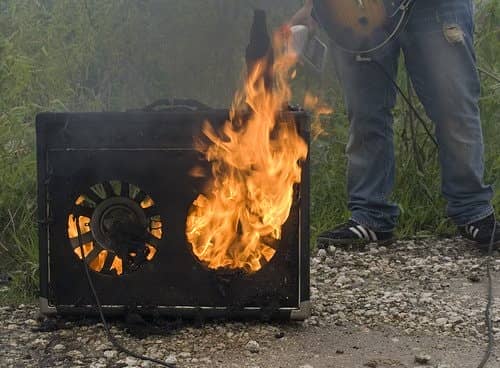
The fact is that tubes ordinarily generate a lot of heat which means they are working fine. It'southward difficult to tell when tubes are genuinely 'overheating' considering all amp and tube combinations are unlike and run optimally at various perimeters. Nigh tubes volition optimally run at a range of 150-250º then that gives a fair amount of variance to work with.
I speak to guitar players who worry about the heat generated from their tubes, pointing a fan at the back of their open dorsum amp to cool them down.
However, I would non recommend this or installing an internal fan. Purely considering bravado absurd air on your tubes, ways they will accept to work harder to maintain their operating temperature.
Secondly, do you remember why yous're told not to pour boiling h2o on a frozen car window on a frosty winter morning? Because you volition crack the drinking glass right? This is known as "thermal shock" and for the tubes, information technology's the same principle simply in reverse.
Trying to apace cool extremely hot tubes can strain the glass, weakening them which will more than probable cause a leak inside the sealed vacuum causing them to die a leaky death.
The reality is that the amp will have been designed to withstand the heat for almost situations: bedchamber playing, rehearsing and performing on a humid, sweaty, stage at some expiry metallic gig for instance.
With that said, I would recommend a fan for the amp facing at a 45-degree angle only not direct in front of the tubes.
The primary reason why tubes get a little likewise hot is they have either likewise much power are too much voltage running through or a combination of both.
Go on in mind, that the heat coming from the amp tin can be from other components, not just the tubes. However, if you experience that they are raging hotter than usual, take them to your local amp tech to give them a look over.
Every bit a side notation, equally nosotros all know tube amps are super expensive. Merely do you want to know why? I created this interesting post about why tube amps are and then expensive. I encourage you to detect out why!
When to Replace Ability/Pre-amp Tubes?
Starting time, let's get this out the way, this is a hotly debated topic within the tube amp community.
Mostly on gear forums but to tell you the truth, at that place is no concrete answer as tubes don't have a specific life bridge earlier they requite out.
Some tube worshippers will replace them every two years, whereas, others volition only replace their current tubes until they die an honorable death. So the question is… who's right?
In my opinion, the chief reason why you volition desire to supersede your tubes relates to tone.
When you starting time bought your amplifier, you must accept been delighted with the tone, that'south why you bought information technology in the first place correct? Over time and usage, nevertheless, the sound begins to slowly dethrone and is not as crisp and sharp as it used to be.
The change may accept been that irksome and gradual you lot may have not even noticed with your ears adapting to the current tone? A full fresh power tube replacement will inevitably requite your amp a new lease of life upgrading the tone like to when y'all starting time purchased information technology.
So how long will your tubes last until they featherbed their optimal role? There's no set time only roughly this is a general standard for well-nigh tubes…
Average Pre Amp Tube Lifespan
Near manufacturers = '1000-5000 hours of usage'
Average Ability Tube Lifespan
6L6, 6V6, 5881WXT, EL34, = 'chiliad hours' of usage RL84 = '500 hours of usage'
As stated this isn't set in stone, as at that place are many other factors to consider including plate voltage, load inexpedience, bias current, the historic period of the amp, hours of use, transportation impairment, manufacturer etc.
The point is when you feel the sound and tone is not dynamic equally information technology used to be then a fresh tube alter is on the cards.
The primary matter to mind for is your amps bass response, level of dial and drive. All these factors will make the bottom-end sound lose and muddy which is normally a clear sign your ability tubes demand replacing.
It is as well important to bank check the visual signs of wear and tear on your power and preamp tubes as stated above non merely audible signs.
Some other reason why you lot volition desire to supercede your tubes is they volition inevitably burn down out, blow or fail (depending on the reliability of the amp and individual tubes).
keep in mind, when tubes featherbed their expected usage time, the probability that they will fail increases, meaning they are much more likely to short out and accident a fuse which is something to continue in mind if you are gigging regularly and don't want to be caught out on phase.
It's also important to know that when a tube has failed, y'all must not use the amp until the failed tube has been replaced as operating with a faulty tube can impairment the transformers.
Every bit nosotros know, tube amps are awesome for authentic and smooth valve distortion. But tin can a solid-state audio like a tube amp? Well, I made this post uncovering whether it is possible. You can read this post here!
How to Modify your Tubes Safely!
Do Dissimilar Tubes Change the Amps Tone?
I like to think of this as irresolute 'apples for apples', certain some apples from dissimilar farmers will taste slightly dissimilar, some sweeter some sourer, simply ultimately it will still taste similar an apple!
I do concur, swapping ability and preamp tubes volition give you lot a slight difference in tone, but we are talking five-eight% deviation here. Now changing the amp's speaker is like eating an orange!
This can serve upwardly to a 50-80% difference in sound meaning that tubes, although practise play a part in tone, don't need that much attention.
With that said, I exercise recommend you sample many different pre and power tube combinations with your amp as your budget can possibly afford. The reason being that you will discover a combination that suits the sound of your amplifier and tones you want to achieve.
Regardless of what tubes you are using: 6L6, 6V6 EL34, EL38, 5881 etc, Each have their own sonic characteristic which volition slightly alter the sound and feel of your amp, helping you narrow the search for your ideal tone.
Conclusion
In my heed, tube amps are the still the near accurate sound when it comes to tone. Your tubes are the workhorses of your amp.
Frail every bit they are fantastic, they do demand some attention to continue your amp healthy and happy. Hopefully, this article has informed and given you lot a heads upwards on the current condition of your tube amplifier.
Check Out My Related Post
Which do you prefer? The sound of baloney from a real amp or effect pedal? I have a consummate comparing post between the sound of amp and pedal distortion (here)
Source: https://tonetopics.com/tell-amps-tubes-gone-bad/
Posted by: carsonadvit1993.blogspot.com
0 Response to "What Does A Bad Disa Valve Sound Like Youtube"
Post a Comment